History
Today’s Builders are indelibly linked to UC Berkeley’s benefactors of the past: all connected by a desire to make a difference in the world, all woven into the fabric of the university’s rich history.
Take a Walk Through the Years
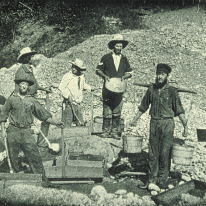
1849
The Gold Rush begins.
1866
The state legislature decides to establish a college to teach agriculture, mining, and mechanical arts using federal land grants.
1867
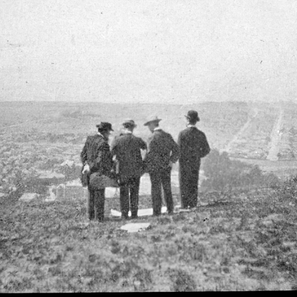
The College of California merges with the state college, donating its 160-acre campus site in Berkeley (pictured) to the State of California.

1869
The University of California opens its doors in Oakland.
The College of Letters, now the College of Letters & Science, is established.
1870
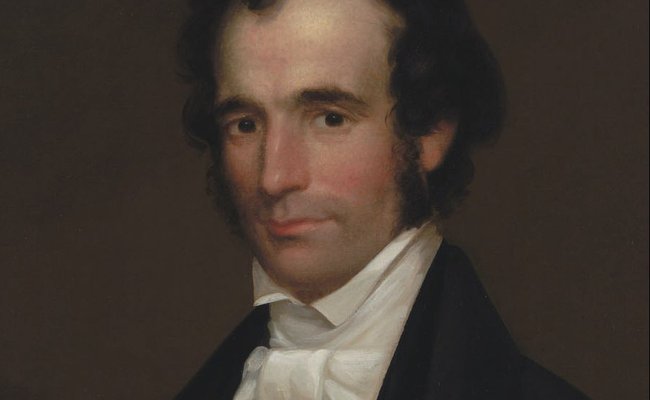
Henry Durant, a Congregational minister and a founder of the College of California, becomes the first president of the University of California.
1872
Regent Edward Tompkins’ gift establishes the university’s first endowed chair, one that supported learning in oriental languages and literature.
Daniel Coit Gilman is appointed the second president of the University of California.
Berkeley’s first graduating class charters the Cal Alumni Association to promote “good fellowship and kindly feelings among its members and the fostering of liberal and scientific culture on the Pacific Coast.”
1873
The University of California graduates its first class and moves into new quarters — North and South Halls — in Berkeley. Enrollment stands at 199 students.

1875
A bequest from James Lick (pictured) finances the university’s first scientific research facility, an observatory on Mt. Hamilton.
1879
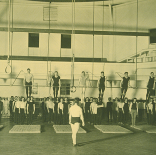
Oakland businessman A. K. P. Harmon provides the funds to build Harmon Gymnasium (pictured). In 1932, Edwards Fields and Stadium are named after his son-in-law, math professor George C. Edwards, Class of 1873.

1881
Henry Douglas Bacon donates books, works of art, and funds that are matched by the State to build the Bacon Art and Library Building (pictured).
1882
William Carey Jones teaches a course in Roman law, the seedbed for Berkeley Law.
1892
Cal and Stanford play the first Big Game in San Francisco. The final score is Stanford 14, Cal 10.
1894
Regent Jacob Reinstein and drawing instructor Bernard Maybeck begin to discuss improving the campus.
1895
Renowned English professor Charles Mills Gayley composes the song, “The Golden Bear,” and the Golden Bear becomes the mascot of the university.
1896
Phoebe Apperson Hearst funds an international competition to develop a campus architectural plan.
Architect Julia Morgan receives a degree in civil engineering. She later designs three campus buildings: the Hearst Greek Theatre, Girton Hall, and Hearst Gymnasium.
1897
Levi Strauss matches funds for 28 scholarships created by the state legislature, launching a longstanding philanthropic relationship between his family and the university.
1898
Cora Jane Flood provides funds to establish the College of Commerce, now the Walter A. Haas School of Business.
1899
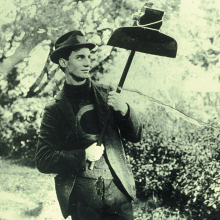
The Stanford Axe (pictured) first appears at a Cal-Stanford baseball game in San Francisco.
Benjamin Ide Wheeler becomes the eighth president of the University of California.

1901
The Phoebe Apperson Hearst Museum of Anthropology is founded.
1903
John Galen Howard begins to execute the campus architectural plan and establishes the Department of Architecture, now part of the College of Environmental Design.
Commencement is held for the first time in the new Hearst Greek Theatre, a gift of William Randolph Hearst. President Theodore Roosevelt delivers the commencement address.
1905
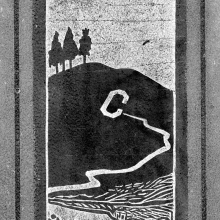
Students from the Classes of 1907 and 1908 build the “Big C” on Charter Hill (pictured).
Hubert Howe Bancroft’s collection of manuscripts and books is added to the university’s collection.
1906
Elizabeth Josselyn Boalt gives funds for a building to house the Department of Jurisprudence, now called Berkeley Law.
1909
Annie Montague Alexander provides support to establish the Museum of Vertebrate Zoology. Joseph P. Grinnell is appointed its first director.
1910
Sather Gate is built, funded by the Jane K. Sather Trust. In 1914, Sather Tower, known as the Campanile, is completed. The Campanile’s chimes ring for the first time on November 2, 1917.
1911
Charles Franklin Doe’s bequest finances construction of Doe Memorial Library.
1912
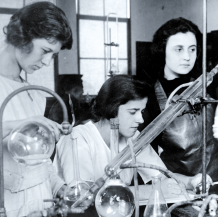
Gilbert N. Lewis comes to UC Berkeley to head the College of Chemistry.
1919
Joseph C. Rowell, Class of 1874, retires after 44 years as the university librarian. At Rowell’s memorial service in 1938, President Wheeler notes that he was the last living link to the university’s founders.
1920
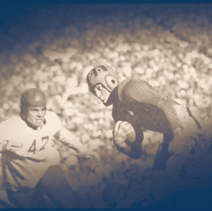
Andy Smith’s unbeaten Wonder Team wins the first of four Pacific Coast Conference titles and goes on to win the Rose Bowl in 1921.
1921
May T. Morrison donates an extensive book collection and provides funds for the Morrison Library in Doe Memorial Library.
1923
A statewide campaign brings $1 million in contributions to build California Memorial Stadium, originally dedicated to students who lost their lives in World War I.
1924
The School of Education, founded in 1892, finds a home in Haviland Hall, built with a gift from Hannah N. Haviland.
1927
William Randolph Hearst gives funds for the Hearst Gymnasium for Women in memory of his mother, Phoebe Apperson Hearst.
1928
Contributions from A.P. Giannini and others support the first endowed chair of Italian culture. Giannini also provides funds to erect Giannini Hall, the home of the Rausser College of Natural Resources.
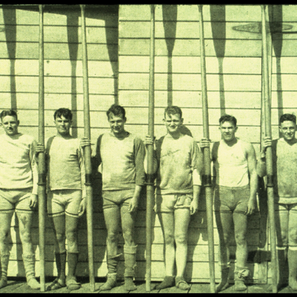
Cal Crew (pictured) wins the Olympic gold medal for the United States. They repeat this feat in 1932 and 1948.
John D. Rockefeller Jr. donates $1.75 million for the purchase of land for and construction of International House, which opens in 1930.
1929
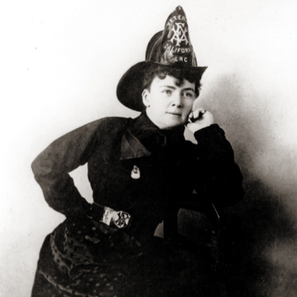
Mary McNear Bowles (pictured), Class of 1882, the widow of alum and regent Philip Bowles, gives the funds to build the university’s first student residence hall for men. Now co-ed, Bowles Hall is the only residential college at Berkeley.
1930
Lillie Hitchcock Coit (left) establishes the Charles M. and Martha Hitchcock Chair in memory of her parents. Her father’s 1885 gift endowed the university’s prestigious Hitchcock lecture series.
Robert Gordon Sproul, Class of 1913, becomes the 11th president of the University of California.
1939
Ernest O. Lawrence receives the Nobel Prize in Physics, the first Nobel Prize to be awarded to UC Berkeley faculty, and the first ever given to a professor at a public university. It is the first of 26 Nobel Prizes to be awarded to Berkeley faculty.

1941
Oski (pictured) makes his first appearance at a rally for first-year students.
The School of Optometry is established.

1942
The first women’s dormitory, Stern Hall, opens. Funds were donated by Rosalie Meyer Stern (pictured right, in white hat). Her husband was Sigmund Stern, Class of 1879.
1948
The California Alumni Foundation is established to encourage private gifts, trusts, and bequests for the benefit of UC Berkeley. It is renamed the UC Berkeley Foundation in 1975.
1949
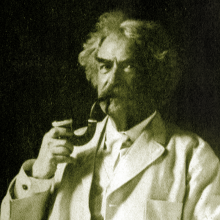
Clara Clemens Samossoud donates the Mark Twain Papers to Berkeley.
1952
Clark Kerr becomes the first chancellor of the UC Berkeley campus.
1954
Alumni House opens as an on-campus home for alums, funded by the Cal Alumni Association.
1957
The student humor magazine, The Pelican, gets its own building with a gift from the first editor, Earle C. Anthony, Class of 1903. The Pelican Building is now the Graduate Student Assembly Building.
1958
A bequest from Dr. and Mrs. Alfred Hertz finances the construction of the Hertz Memorial Hall of Music.
1959
The Strawberry Canyon Recreational Facilities complex opens with funds donated by Walter A. Haas, his wife, Elise, and her aunt, Lucie Stern.
1961
The new Student Union Building is completed with the help of gifts from two regents, Edwin W. Pauley and Edward H. Heller. The building is renamed for Martin Luther King Jr. in 1985.

1964
The Free Speech Movement brings UC Berkeley to the center of a national debate when students, including Mario Savio, hold demonstrations against rules prohibiting political activities on campus.
1966
UC Berkeley ranks No. 1 in the nation for the quality of its graduate programs and maintains this ranking in each decade through the 2010s.

1968
German expressionist painter Hans Hofmann (painting pictured), makes a gift of paintings and funds to help launch the University Art Museum, known today as the Berkeley Art Museum.
The Lawrence Hall of Science, a hands-on museum and innovative teaching center, is founded in honor of Ernest O. Lawrence.
The family of Isadore Zellerbach provides funds for Zellerbach Hall, the university’s first comprehensive performing arts center.
1969
The School of Public Policy is established. It is named for Richard ’41 and Rhoda ’46 Goldman in 1997 in honor of their gift to the school.
1980
The Bechtel Engineering Center, a gift of Laura and Stephen D. Bechtel, Sr. and other friends of Cal, opens.
Poet Czeslaw Milosz, UC Berkeley’s first Nobelist outside of the sciences, receives the medal in literature.

1982
Cal beats Stanford with “The Play,” a five-lateral kickoff return for a touchdown as time runs out.
The Spieker Aquatics Complex (pictured) opens with the lead gift made by Ned ’66 and Carol ’66 Spieker.
1983
Gerard Debreu becomes the first of six faculty members to win the Nobel Prize in Economics.
1985
Fifteen computer companies contribute to development of a computer-aided electrical engineering design center in Cory Hall.
1986
Former Governor and Mrs. Edmund G. “Pat” Brown become the first major donors to UC Berkeley’s campaign to modernize campus biology facilities.

1987
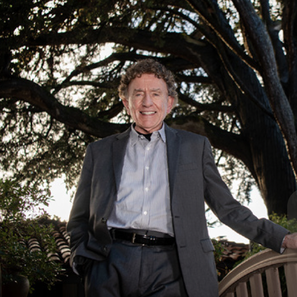
Chancellor Ira Michael Heyman (pictured) leads the university’s first campuswide comprehensive fundraising campaign, Keeping the Promise, which raises $469 million.

1988
For the first time, no ethnic group forms a majority among undergraduates at UC Berkeley.
1990
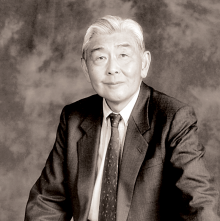
Chang-Lin Tien becomes the university’s eighth chancellor and the first Asian American to head a major U.S. research university.
1993
A new university health center, the Tang Center, opens, thanks to a gift from the Tang Family Foundation in honor of Hong Kong businessman Jack Tang.

1994
Soda Hall (pictured), a new computer science center named for Y. Charles and Helen C. Soda, opens. More than two-thirds of undergraduates now enroll in a computer science course.
The Valley Life Sciences Building is renovated as part of a campaign to update facilities for the biological sciences. The project is funded through the Wayne and Gladys Valley Foundation.

1995
The mini-campus of the Haas School of Business opens. The school is renamed the Walter A. Haas School of Business in memory of Haas Sr., and in recognition of lead gifts to the project (pictured: son Walter A. Haas Jr.).

1997
Glenn Seaborg (pictured), Nobel laureate, professor, and former chancellor, becomes the only living person to have an element (seaborgium) named after them.
Robert M. Berdahl becomes chancellor and takes over leadership of the Campaign for the New Century. The campaign raises $1.44 billion in private support, the most ever raised by a public university at the campaign’s conclusion in 2001.
Tan Kah Kee Hall, named for the industrialist and philanthropist, provides laboratory space for chemistry and chemical engineering research.

1999
The Golden Bears have a new home in the Walter A. Haas, Jr. Pavilion. This “new Harmon Gym” is twice as large but retains the spirit of the old building.

2002
The Hearst Memorial Mining Building (pictured) reopens after a four-year renovation and seismic improvement financed by public and private funds.
The university honors the late Chang-Lin Tien by naming the Center for East Asian Studies after him.
The Association of Research Libraries ranks the University Library as the top public research university library in North America.
2003
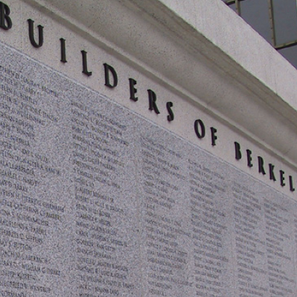
The university dedicates the Builders of Berkeley monument on the terrace of Doe Memorial Library in honor of the university’s leading benefactors.
2004
Robert J. Birgeneau becomes UC Berkeley’s ninth chancellor and commits to improving access and excellence during his tenure.
2006
Professor George Smoot receives the Nobel Prize in Physics for his work in imaging the early universe.

2007
The William and Flora Hewlett Foundation makes a landmark gift of $113 million, including a challenge grant of $110 million to endow 100 new faculty chairs. The campus fulfills the challenge two years earlier than anticipated.
Stanley Hall (pictured), a state-of-the-art bioscience research facility and headquarters for the California Institute for Quantitative Biosciences, also known as QB3-Berkeley, opens. It brings together preeminent bioengineers, biologists, chemists, and physicists under a single roof.
UC Berkeley, in partnership with Lawrence Berkeley National Laboratory and the University of Illinois at Urbana-Champaign, is selected to lead the Energy Biosciences Institute, an unprecedented green energy effort.
2008
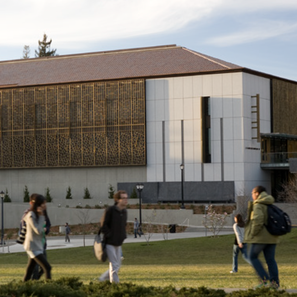
With a lead naming gift, the C.V. Starr East Asian Library (pictured) opens, making it the first freestanding structure at a United States university erected solely for East Asian collections.
The Campaign for Berkeley launches with a $3 billion goal aimed at boosting the level of private support to build lasting endowment funding.
2009
The Bancroft Library reopens, following a $64 million seismic retrofit and renovation funded by the State of California and more than 700 donors, creating an elegantly upgraded home for books and special collections.
Sutardja Dai Hall opens as the new home of the Center for Information Technology Research in the Interest of Society or CITRIS.

2010
Richard C. Blum Hall is unveiled, creating a new home for the Blum Center for Developing Economies that was established to seek innovative solutions to global poverty.

2011
The Magnes Collection of Jewish Art and Life, which became part of UC Berkeley in 2010, opens in a renovated home in downtown Berkeley, thanks to lead donors Warren Hellman ’55, Tad Taube, and the Koret Foundation.
Propelled by a lead $40 million gift, the Li Ka Shing Center for Biomedical and Health Sciences (pictured) is dedicated. It serves as a nexus for research exploring the root causes of diseases.
Professor Saul Perlmutter wins the Nobel Prize in Physics for leading the team that discovered the universe’s accelerating expansion.
2012
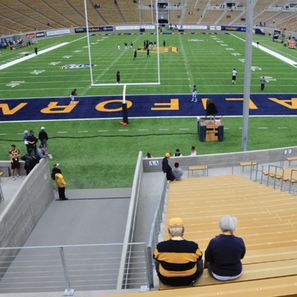
The renovated California Memorial Stadium opens and is rededicated to all Californians who sacrificed their lives in service to the nation.

2013
The Campaign for Berkeley concludes, having raised a record $3.13 billion, reinforcing UC Berkeley’s stature as a world-class university.
Nicholas B. Dirks becomes the university’s 10th chancellor. He is known for his commitment to accessible, high-quality undergraduate education and innovation across disciplines.
Randy W. Schekman, professor of molecular and cell biology, wins the Nobel Prize in Physiology or Medicine for his role in revealing the machinery that regulates the transport and secretion of proteins in our cells.
2014
UC Berkeley and UCSF launch the Innovative Genomics Initiative, backed by a $10 million gift from the Li Ka Shing Foundation. At its core is a revolutionary technology discovered by Professor Jennifer Doudna, the initiative’s first executive director.
2015
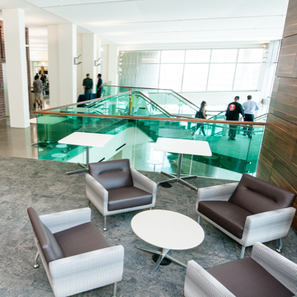
The campus puts the finishing touches on its new ASUC Student Union, part of a $223 million project to renovate and revitalize Lower Sproul Plaza.

2016
The UC Berkeley Art Museum and Pacific Film Archive opens at its new location in downtown Berkeley. The 83,000-square-foot facility reimagines a former printing plant into a dramatic new structure.
The Legends Aquatic Center, funded primarily by private donors, opens with a splash. The $19 million Olympic-grade facility has a 52-meter pool and a three-story diving tower.
2017
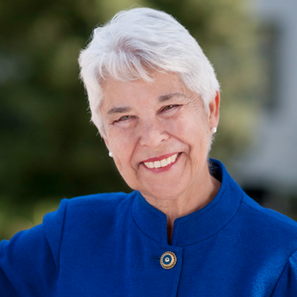
Carol T. Christ (pictured) is named Berkeley’s 11th chancellor. The university’s first female chancellor is a renowned scholar of Victorian literature. Christ held numerous leadership and teaching positions at UC Berkeley and later served as president of Smith College.
Connie & Kevin Chou Hall opens its doors. The $68 million space includes 80,000 square feet of state-of-the-art classrooms and flexible learning spaces. It was funded entirely by Berkeley Haas’s dedicated alums and friends.

2018
UC Berkeley celebrates its sesquicentennial on March 23, 2018. Guided by the motto, Fiat Lux, the university continues to light the way for generations of brilliant students.
The Magnes Collection of Jewish Art and Life receives the full works of legendary Russian-born American photographer Roman Vishniac (1897–1990) (pictured). Gifted by his daughter, Mara Vishniac Kohn, the collection includes over 6,500 photographic prints, 10,000 negatives, and 40 albums of slides.
A $20 million matching gift from the Hellman Fellows Fund creates the Society of Hellman Fellows, which will double the number of fellowships awarded to early-career faculty each year through the Hellman Fellows Program as well as support it in perpetuity. The program was established in 1995 by F. Warren and Chris Hellman.
2019
The Weill Neurohub launches with a $106 million gift from the Weill Family Foundation. A collaboration between UC Berkeley, UC San Francisco, and the University of Washington, the center will focus on finding new treatments for brain disease.
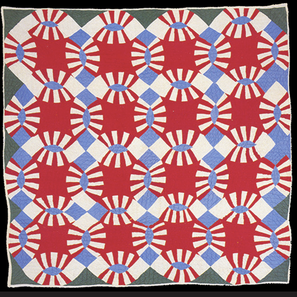
Eli Leon, an Oakland-based art scholar, gifts nearly 3,000 quilts to the Berkeley Art Museum and Pacific Film Archive. Representing works by more than 400 African American artists, it is believed to be the largest collection of its kind ever assembled.
2020
The university launches Light the Way: The Campaign for Berkeley. In 2022, with a year remaining to meet its $6 billion goal, an anonymous gift to support the Robert T. Matsui Center for Politics and Public Service at the Institute for Governmental Studies brings the total over the finish line. The campaign concludes at the end of 2023.
The university commemorates the 150th anniversary of the UC Board of Regents’ resolution to open the university’s doors to women “on equal terms” with men. The yearlong celebration, titled 150 Years of Women at Berkeley, recognizes the countless women who have studied, worked, taught, and researched at Berkeley since then.
The College of Natural Resources receives its largest-ever gift, $50 million, from former dean Gordon Rausser (pictured). The college is renamed in his honor. Professor Rausser’s commitment is the largest naming gift of any academic unit on campus at the time. The investment establishes three key endowed funds to provide long-term support of the college.
The COVID-19 pandemic forces the university to modify operations, but research units, faculty, administrators, and donors quickly mobilize to launch unprecedented breakthroughs in testing and potential vaccines and provide immediate support to students.
Biochemist Jennifer Doudna wins the Nobel Prize in Chemistry, sharing it with colleague Emmanuelle Charpentier for the co-development of CRISPR-Cas9, a genome editing breakthrough that has revolutionized biomedicine.
Reinhard Genzel, professor emeritus of physics and of astronomy, shares the Nobel Prize in Physics for the discovery of a supermassive compact object at the center of our galaxy.

2021
The Dr. Herbert and Nicole Wertheim Family Foundation pledges a historic $50 million to the UC Berkeley School of Optometry, the largest gift ever to a school of optometry in the country. The school is renamed the Herbert Wertheim School of Optometry and Vision Science.
Building on an anonymous gift of $252 million, UC Berkeley receives $75 million in additional gifts for a visionary new home for the Division of Computing, Data Science, and Society, leading to a September 2022 groundbreaking for the project. The Gateway (pictured) will reinforce the university’s position as a leader in computing and data science research and education.
David Card, a labor economist and professor of economics, shares his Nobel Prize for work that dramatically shifts understanding of inequality and the social and economic forces that affect low-wage workers.
2022
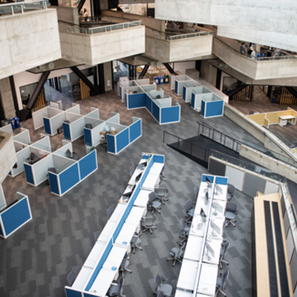
The Bakar BioEnginuity Hub (pictured), the campus’s state-of-the-art home for bio-entrepreneurship, opens its doors. The remarkable facility, located in Woo Hon Fai Hall, pairs the Bakar Labs incubator with fellowships and programming for students and researchers, equipping STEM entrepreneurs with labs, offices, equipment, and shared community spaces.
Construction begins on the Helen Diller Anchor House, a 772-bed, apartment-style housing project for UC Berkeley transfer students that is being designed, built, and funded by the Helen Diller Foundation. It opened in 2024.
The College of Chemistry celebrates its 150th anniversary.
The first cohort of students supported by the African American Initiative (AAI) graduates from UC Berkeley. The AAI scholarship is a valuable tool to help draw African American students who have been admitted but would otherwise choose to go elsewhere, helping to transform the student population and create a more welcoming, inclusive campus.
2023
Berkeley becomes an Asian American, Native American Pacific Islander-Serving Institution.
The UC Board of Regents votes to establish UC Berkeley’s College of Computing, Data Science, and Society, the campus’s first new college in more than 50 years.
Berkeley Haas celebrates its 125th anniversary and recognizes Cora Jane Flood for her gift that established the school in 1898.
The Herbert Wertheim School of Optometry and Vision Science celebrates its 100th birthday with a host of centennial events throughout the year.
Berkeley is ranked the No. 1 university for producing Peace Corps volunteers over the past 20 years — more than 3,750 in all.
One of the largest capital campaigns launched by any public or private U.S. university, Light the Way: The Campaign for Berkeley ends with more than $7.37 billion raised, the largest total in history for any public university and for any university without a medical school.

2024
The campus announces plans for the Bakar ClimatEnginuity Hub, a new space that will provide Berkeley innovators with the resources they need to launch successful companies in the burgeoning field of climate technology. The hub is scheduled to open in the 2027–28 academic year.
Rich Lyons ’82 (pictured) is named Berkeley’s 12th chancellor. The first undergraduate alum to be appointed chancellor, Lyons served from 2008–18 as dean of the Haas School of Business. In 2020, he became Berkeley’s first-ever chief officer of innovation and entrepreneurship.

2025
The Grimes Engineering Center opens, adding more than 35,500 square feet and two floors to the former Bechtel Engineering Center. Funded entirely by philanthropy, it provides a welcoming space for engineering students to gather and collaborate.
Related Stories
Planting a Seed in the Wild West
The idea of a state university began to incubate in the minds of Californians before California had even become a state. In 1849, when a group of farsighted community leaders met to draft a state constitution, they included a provision for a university.
Read more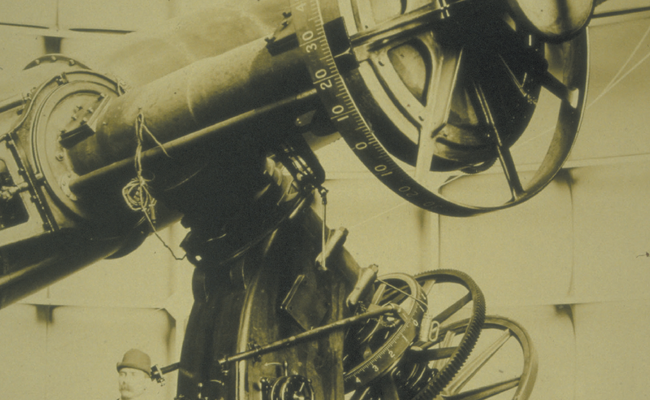
The Sky is Not the Limit
The idea of building a university on the frontier captured the imagination of many Californians, and a variety of new, and sometimes eccentric, sponsors stepped forward to offer their support. One was James Lick, a Pennsylvania cabinetmaker, who made a fortune in San Francisco real estate. After first planning to construct a pyramid for himself in downtown San Francisco, Lick was persuaded that an observatory would be a more suitable memorial.
Read more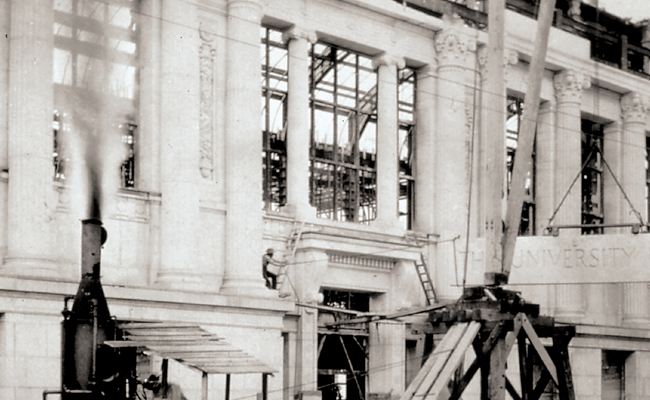
The University Library: A Foundation for Teaching and Research
Distinguished scholars could not be persuaded to leave their universities and move to distant California unless there was a first-rate library to support their research.
Read more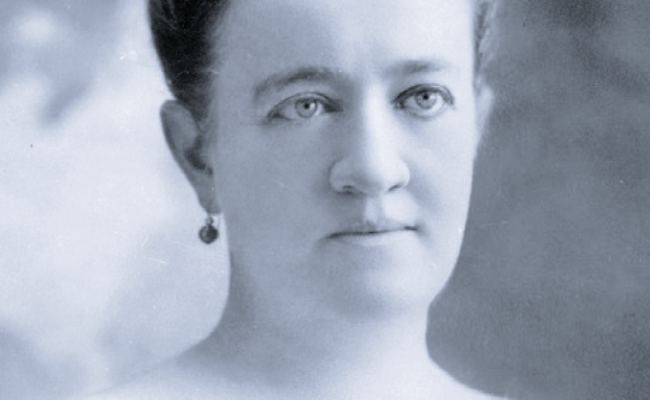
Advancing Education, Business, and Law
As the population of California exploded in the late 1800s, prominent citizens recognized the need for a more coherent social and economic order for what was still in many ways a frontier community. Three of the university’s distinguished schools were established during these years: education, business, and law.
Read more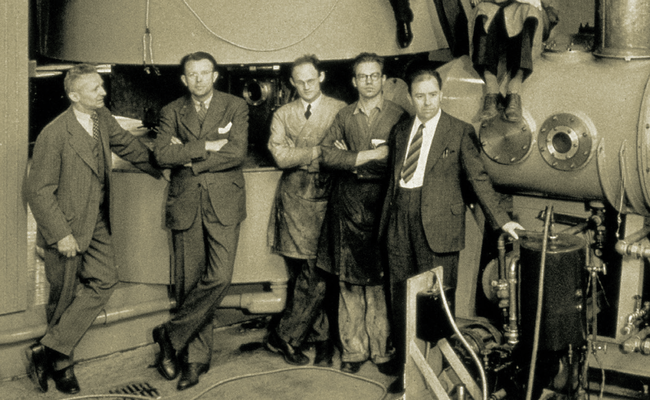
Brilliant Discoveries Open New Frontiers
Developing a first-rank faculty has always been critical to establishing the university’s preeminence, and few deans had a more profound impact on Berkeley’s future than Gilbert N. Lewis. Lewis came from the Massachusetts Institute of Technology to head the College of Chemistry in 1912, and he soon assembled the faculty who would create a revolution in scientific research.
Read more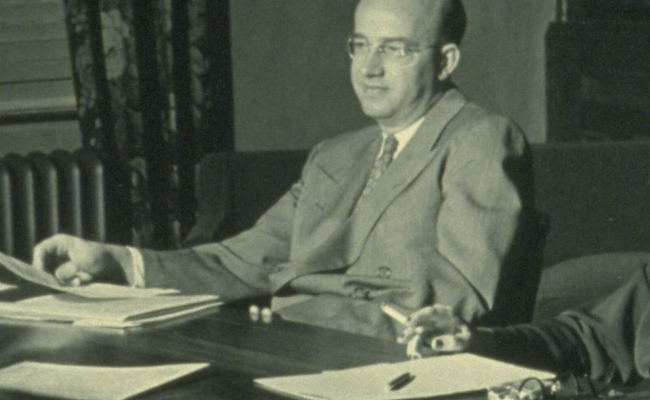
Berkeley Emerges as a World-Class University
Robert Gordon Sproul, Class of 1913, took office as university president in 1930 just as the Depression sent state support plummeting.
Read more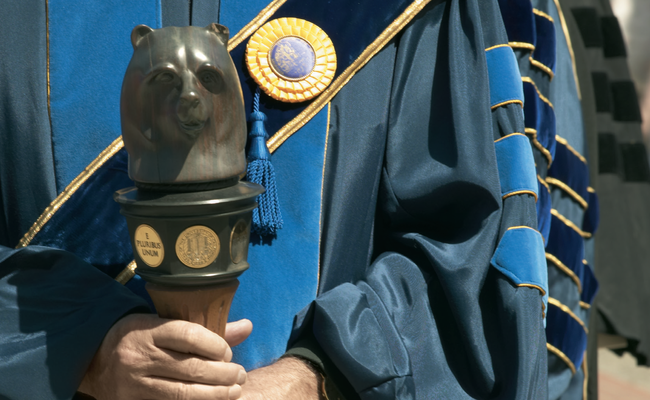
Faculty of Excellence
One reason for UC Berkeley’s preeminence can be traced back to the quality of the teachers that it attracted during its earliest days. Fittingly, the first major gift to the University of California was an endowed chair of learning established as the Agassiz Professorship of Oriental Languages and Literature in 1872. Regent Edward Tompkins deeded 47 acres of land that was sold to yield $50,000 in gold coin, a gift that has grown to support four endowed chairs and is valued at many millions of dollars today.
Read more
The New Era for Energy and the Environment
Research into clean energy and climate change shines light on some of the most defining challenges of the 21st century, with unprecedented implications for the future of Earth and its environment, along with our country’s national security and economic competitiveness.
Read more